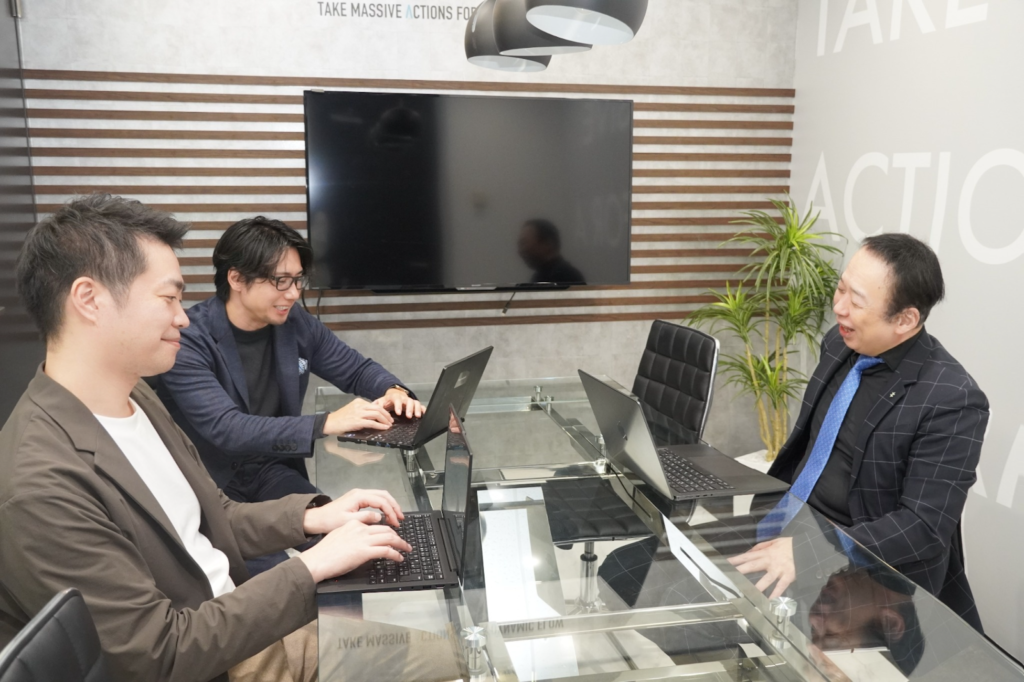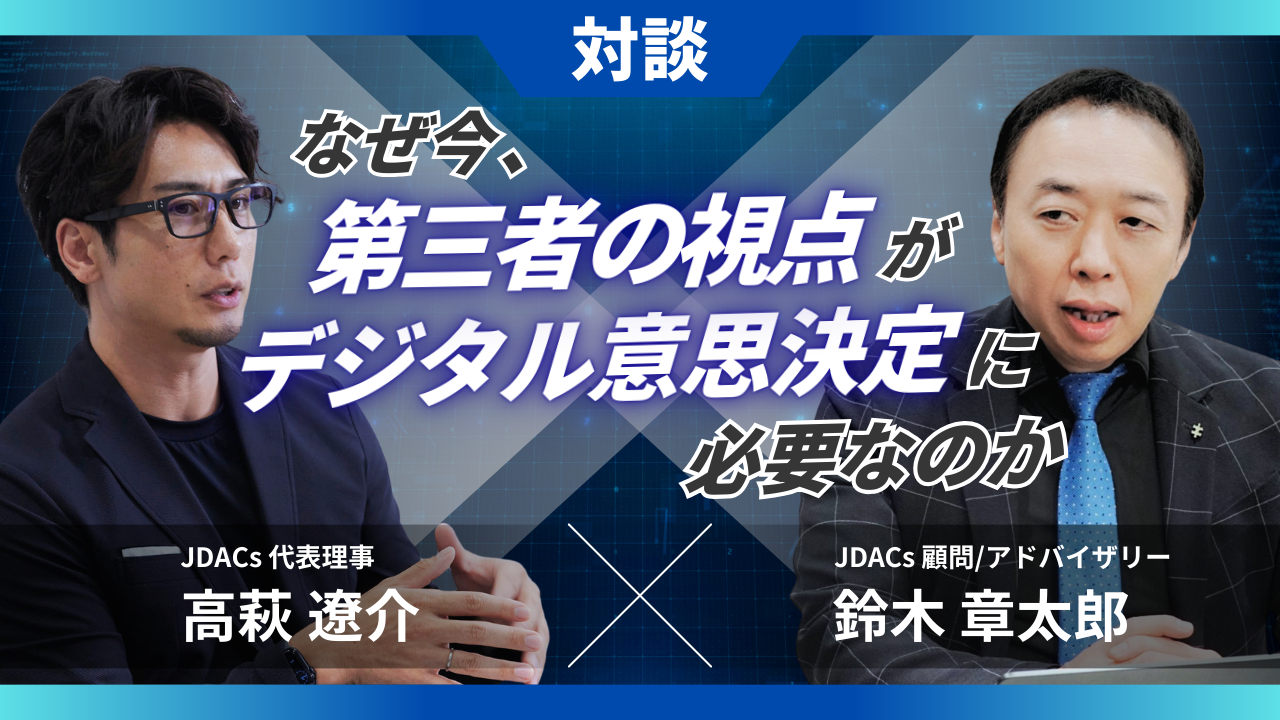
Ryosuke Takahagi, Representative Director x Shotaro Suzuki, Advisor/Advisory Board Member
■First Things First
As DX (Digital Transformation) and AI utilization become core issues in corporate management and government administration,
the quality of decision-making, “what to choose and how to decide,” is being questioned more than ever.
However, has the decision-making process been sufficiently verified?
In this dialogue, Ryosuke Takahagi, JDACs Representative Director, and Shotaro Suzuki, Advisor to
, who served as Assistant to the Government CIO and PM of the Digital Agency after working for a foreign IT company on technology standardization activities, and currently serves as an advisor to an independent administrative agency on digital management, discussed the need for third-party advisory services and their social significance.
■What is happening in the field of digital decision making
Mr. Takahagi
I have been involved in many projects in the field of digital marketing and DX support, from strategy development to execution and verification.
What we have become acutely aware of in this process is the problem that the decision-making process can easily become a “black box.
Receive proposals from vendors, review them internally, and decide to implement them.
While this process in itself is natural, it is rarely verified after the fact whether the decision was really the best for the company.
And if it doesn’t work out, they end up concluding that they didn’t know unless they tried.
Mr. Suzuki
You are right.
I have been involved in technical advisory and project management for the digitization of public administration at the Cabinet Secretariat, the Ministry of Justice, the Digital Agency, and the Financial Services Agency, and have seen similar structural issues in both the public and private sectors.
The asymmetry of expertise is particularly large in the technical area.
If there is a gap in knowledge and literacy between the proposer and the judge, it becomes difficult to question the validity of the decision itself.
As a result, the opinions of “loud voices” and “well-known vendors” are more likely to prevail.
This is not a healthy state of affairs.
■Why do we need a “third party”?
Mr. Takahagi
It is precisely this awareness of the issue that led to the establishment of JDACs.
Our goal is to implement in society the ability to “evaluate” and “advise” decisions independently of any particular vendor or stakeholder.
Let me be clear: it is not the vendor or consulting firm’s fault.
Each of them provides value through their expertise.
However, there are inevitable limitations to a structure in which the proposer and evaluator are identical.
That is why we believe that a third-party perspective is necessary.
Mr. Suzuki
It is the same underlying philosophy that has kept me involved in the area of technical standardization and interoperability for many years.
Technology should inherently function as the foundation of society as a whole, not for the benefit of a particular company.
Even during my time at several foreign IT companies, I have been thinking about what is needed for the healthy development of the industry as a whole, which requires neutrality and objectivity, not just the promotion of one’s own products.
This has led to the technical advisory work that I do today.
I sympathize with JDACs activities because its philosophy of “neutrality” and “verifiability” matches the values I have cherished throughout my own career.
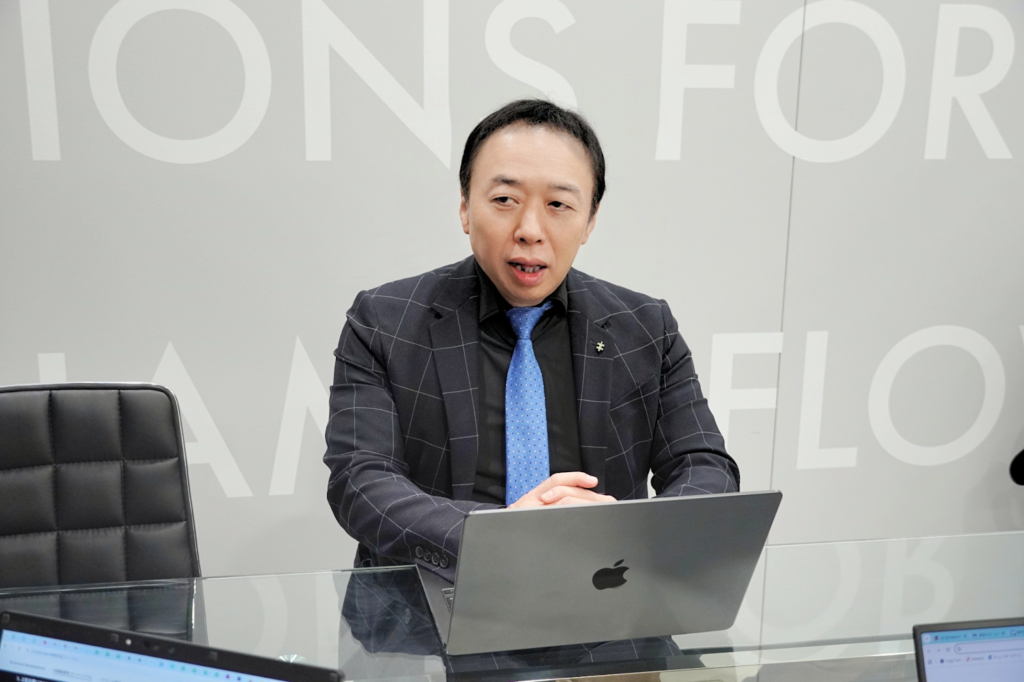
What is a decision based on “evidence and ethics”?
Mr. Takahagi
JDACs mission is “to make evidence-based and ethical digital decision-making the norm in society.
The word contains two elements.
One is “evidence,” or proof.
Make decisions based on data and facts, not just on feeling and experience.
The other is “ethics.
What is technically possible does not necessarily correspond to what is socially desirable.
There are a wide range of issues to be considered, including privacy, fairness, and accountability, even in the use of AI.
Mr. Suzuki
Both of those wheels are important.
I have been involved in human resource development for more than 15 years at the university, crossing technology, institutions, and education, but I have always felt that learning technology alone is not enough.
Engineers are required to have a social perspective, while managers and government officials are required to be technically literate.
I believe that third-party organizations such as JDACs can play a significant role as a bridge between the two.
■For companies, governments, and educational institutions
Mr. Takahagi
JDACs do not only target companies.
Municipalities and educational institutions face similar challenges in their digital strategies and AI applications.
Local governments, in particular, have a structure that makes it difficult to secure expert personnel and easy to become dependent on vendors.
In many cases, educational institutions are wondering what criteria should be used to determine the best way to implement EdTech and utilize data.
Mr. Suzuki
From an administrative standpoint, the promotion of digitization entails “accountability.
They must be able to explain to residents and the council why they chose the technology and why the budget is necessary.
In such cases, the availability of third-party evaluation and review is very useful in ensuring the legitimacy of the decision.
This would be true not only for the government, but also for corporate managers who are accountable to shareholders and boards of directors.
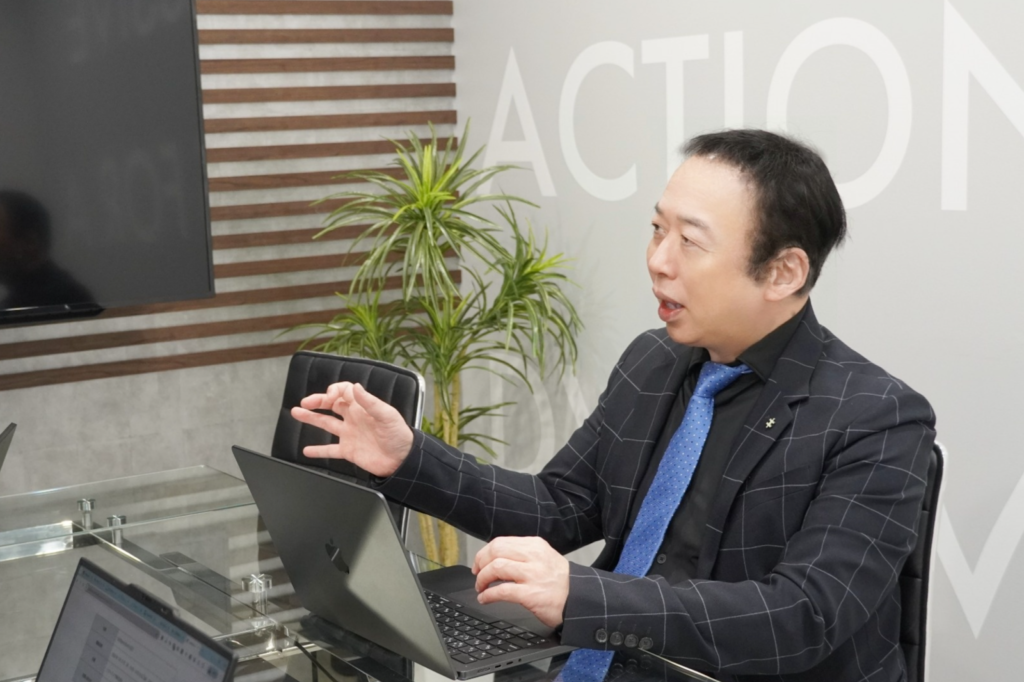
■For the Society of the Future
Mr. Takahagi
Through the activities of JDACs, we hope to foster a “culture of sound judgment” in digital decision making.
It is not about imposing a particular correct answer.
To organize the information necessary to make decisions, identify risks and opportunities, and support the final decision.
We use the term “social integrity” to describe this attitude.
Mr. Suzuki
Digital technology has permeated all areas of society.
Therefore, it is no exaggeration to say that the quality of their decisions will determine the future of society as a whole.
Existence such as JDACs should be a “trusted source of consultation” for businesses, government, and civil society.
We believe this will lead to a better digital society.
Mr. Takahagi
Thank you very much for your time today.
I learned a lot from Mr. Suzuki’s talk based on his many years of experience.
As JDACs, we will continue to contribute to society while valuing neutrality and verifiability.
Mr. Suzuki
Thank you very much for your time here.
Let’s continue to have good discussions.