Association Activities
Activities
Introducion
Background of Establishment
JDACs is developing diverse activities in the areas of advisory, education, evaluation, research, and policy advocacy based on the philosophy of “rooting sound decision-making in digital strategy in society”.
Our activities go beyond mere technical support and function as a neutral knowledge platform that crosses management, society, data, and ethics.
Activity Domains
area of activity
Third Party Advisory
Review Activities
We provide advice, verification, and evaluation of digital strategies, DX measures, and AI implementation projects from a neutral third-party standpoint.
- Evaluation of proposals, requirements documents, RFPs, and PoCs
- Diagnosis of adequacy of project structure, cost structure, and ROI
- Post-implementation review (results verification, KPI analysis, improvement recommendations)
- For auditors, government, and client companies
- Publication of “Second Opinion Report
This will ensure transparency, rationality, and accountability for results in digital investments.
Administration of certification and examination system
(JDACs accreditation system)
JDACs has designed and operates its own certification system to foster practitioners of “Digital Advisory for Strategy.
- JDACs Certified Literacy (L)
- JDACs Certified Advisory (A)
- JDACs Accreditation Review (R)
Through these three-tiered qualification systems, we visualize the quality and social trust of digital advisory services.
In addition, certified individuals will be provided with opportunities to participate in workshops and case studies.
Research and guideline development
Aiming to establish a digital advisory area, we work with national and international experts to analyze the latest trends and ethical, governance, and technological developments.
- Published annual white paper “Digital Advisory Report
- AI Application and Accountability,” and “Data Quality and Consent Management (CMP).”
- Research on themes such as “The Ethics of LTV Measurement,” and advocacy for policy, industry associations, and companies
We promote the creation of digital strategy standards in Japan based on our neutral and practical knowledge.
Education, Seminars,
Symposiums
Various educational activities are being developed to improve the literacy of society as a whole.
- Executive Briefing
- Courses and case studies for practitioners
- Public Forum / Annual Symposium Held
- Implementation of industry-academia-government collaboration programs
Through these efforts, we will create an ecosystem for the development of “neutral advisory personnel.
Principles
Philosophy
Integrity
(Integrity)
We will provide advice from a fair and neutral standpoint and ensure that we are not biased toward any one interest.
Evidence
(Verifiability)
All advice, evaluations, and recommendations are based on data, facts, and results.
Impact
(Outcome sex)
The purpose of advice is to be implemented. Emphasis is placed on activities that produce organizational change and social results.
Original Method
Proprietary Methods
Proprietary AI technology
jointly developed and patent pending with and Massive Act Inc.
DDIM™
Decision Data Integrity Model
DDIM is JDACs unique decision-making integrity verification method,
designed to visualize the quality of decisions
and ensure accountability to society.
Proving the ‘legitimacy’ of decisions with mathematical,
rather than sensory, proofs — a unique architecture.
Structured Concepts of Decision Making
Decision-making is viewed as a graph structure (network) with “arguments” at the top. By visualizing the logical framework rather than numerical calculations, we identify “omissions” and “gaps” in the discussion.
Evaluation Process
It is executed in a series of systematized steps, from organizing and structuring information, to multifaceted quality assessment, to making integrated decisions, and to presenting areas for improvement.
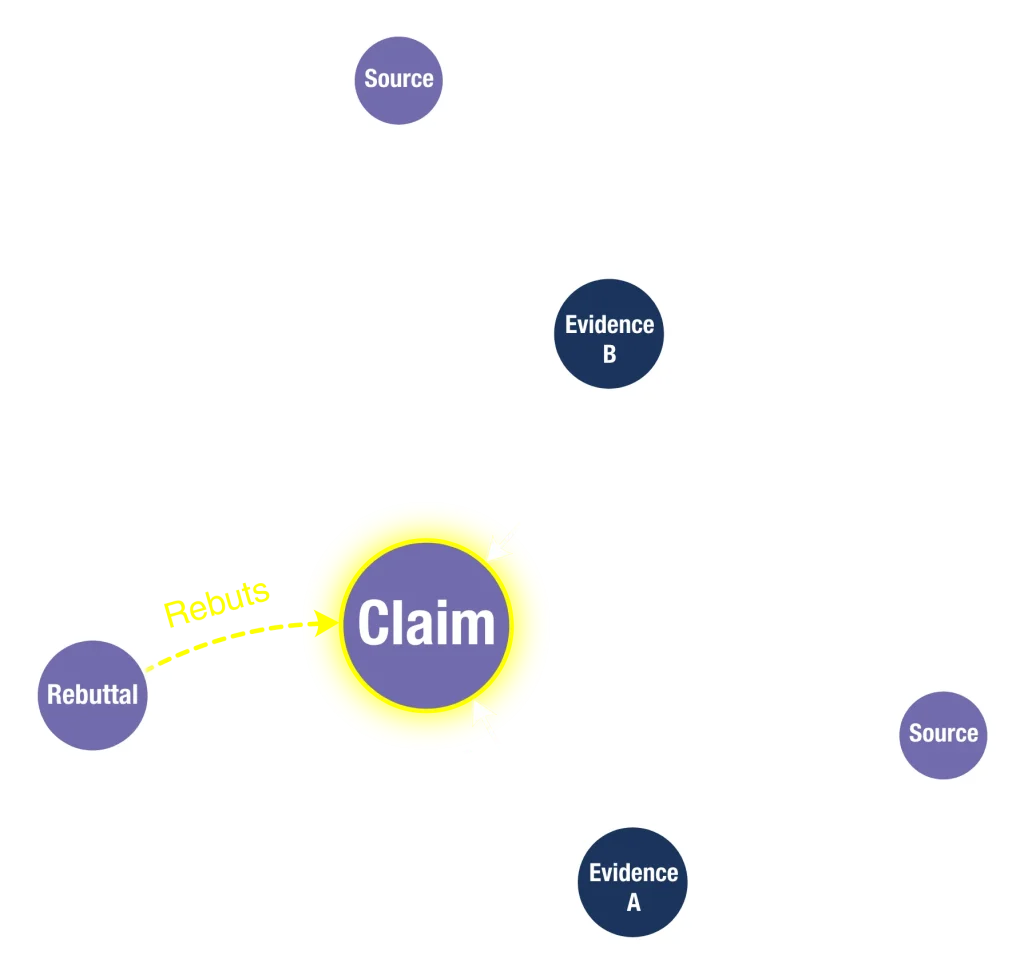
Three challenges facing corporate decision-making
- Personalization
- Assessing the legitimacy of decisions
- Difficulties in accountability and auditing
The main mechanism of DDIM™.
- graphing
structure of
decision making - Node quality
6-axis evaluation - Theory of the weakest
wheel
Core score to be calculated
- validity
- transparency
- accountability
Expected Value and Areas of Application
Value to the organization
Strengthen accountability to stakeholders through objective proof of judgment, reduce audit costs, and accumulate as organizational knowledge.
Usage Scenes
Strict AI governance oversight of management decisions, M&A, government policy decisions, medical diagnostic support, finance, etc.