
Neutral knowledge for digital decision-making in Japan.
General Incorporated Association
Japan Digital Advisory Strategy Council
General Incorporated Association
Japan Digital Advisory Strategy Council
As a vendor-neutral third-party organization, JDACs provides evaluation (Review) and advice (Advisory) on digital
strategy, DX, and AI utilization by companies, local governments, and educational institutions.
JDACs provides a second opinion based on verification to help society make decisions with a sense of conviction.
About JDACs
About JDACs
Japan Digital Advisory Council for Strategy (JDACs) was established in 2025 as a neutral third-party review organization for digital investment and strategy decisions. We are independent of any particular vendor or solution and provide reviews based on expertise and objectivity.
With the rapid evolution of digital technology and the increasing complexity of DX, many organizations are looking for the right decision criteria, and JDACs contributes to improving digital maturity in Japan by providing a neutral perspective and expertise in critical decision making, including digital strategy, AI utilization, system procurement, and investment decisions.
Members
Association Members

As CEO of Massive Act, he has achieved 9 consecutive fiscal years of increased revenue and profit since its inception, on the strength of "repeatable DX/typing" of data utilization, customer strategy, and business growth. He has been ranked No. 1 in Japan and No. 7 in APAC for three consecutive years in the marketing category of FT's Asia's Fastest Growing Marketing Ranking. In 2025, he will establish the Japan Digital Advisory Councils (JDACs), an intellectual organization specializing in third-party reviews and neutral advisory services for DX and digital strategies. (JDACs), an intellectual organization specializing in third-party review and neutral advisory of DX and digital strategies, and assumed the position of Representative Director. Developed a unique AI architecture (patent pending)

Served as Assistant Government CIO (4th Abe reshuffle), PM of Digital Agency, and Digital Advisor to the Financial Services Agency. Currently, Chief Digital & Information Security Advisor at the National Printing Bureau. For years, provided neutral technical advisory and awareness on standardization and interoperability at various foreign IT firms, including Microsoft. Also a lecturer for 15 years at Waseda, Chuo, and Tokyo Tech, promoting public DX through industry-academia-government collaboration. As an advisor to the Japan Digital Advisory Strategy Council, advocates for high-precision business strategy via DX/AI and proprietary technologies such as MACT INTELLIGENCE™ and DDIM™.

While working at the forefront of media for many years as a TV personality, he has also been involved in business production and brand building in recent years, creating value through product and service development based on his own experiences, collaboration with companies and brands, lectures, and ambassadorship. She will move to Malaysia in 2025 and work from two bases, one in Japan and the other overseas. As an ambassador of the Japan Digital Advisory Councils (JDACs) since December, she has been communicating highly specialized topics such as digital and AI to society in an easy-to-understand manner from a sei-katsu-sha's perspective, He is a bridge between the knowledge of experts and society.


Neutral Advisory
in the Digital Era
Why do we need a third-party advisory firm now?
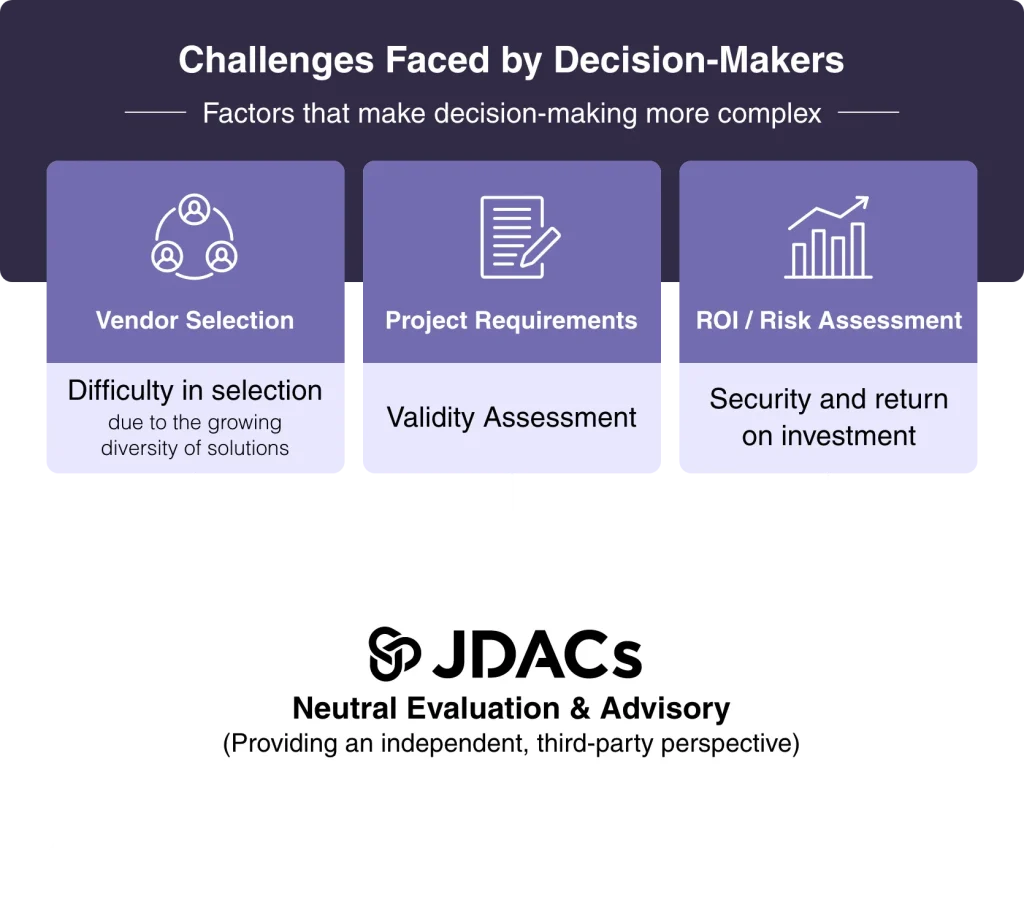
Digital investments are important management decisions for organizations, but it is not easy to objectively verify their validity and results. Many organizations lack internal personnel with specialized knowledge and face challenges in basing investment decisions and measuring results.
In addition, vendors and consultants make proposals based on their own solutions and methodologies, making it difficult to expect a completely neutral perspective. This can lead to risks such as inherently suboptimal choices and overinvestment.
JDACs provide reviews based on professionalism and objectivity, independent of specific interests. This increases transparency in an organization’s digital investments and supports an environment in which management can make decisions with confidence.
Original Method
Proprietary Methods
Proprietary AI technology
jointly developed and patent pending with and Massive Act Inc.
DDIM™
Decision Data Integrity Model
DDIM is JDACs unique decision-making integrity verification method,
designed to visualize the quality of decisions
and ensure accountability to society.
Proving the ‘legitimacy’ of decisions with mathematical,
rather than sensory, proofs — a unique architecture.
Structured Concepts of Decision Making
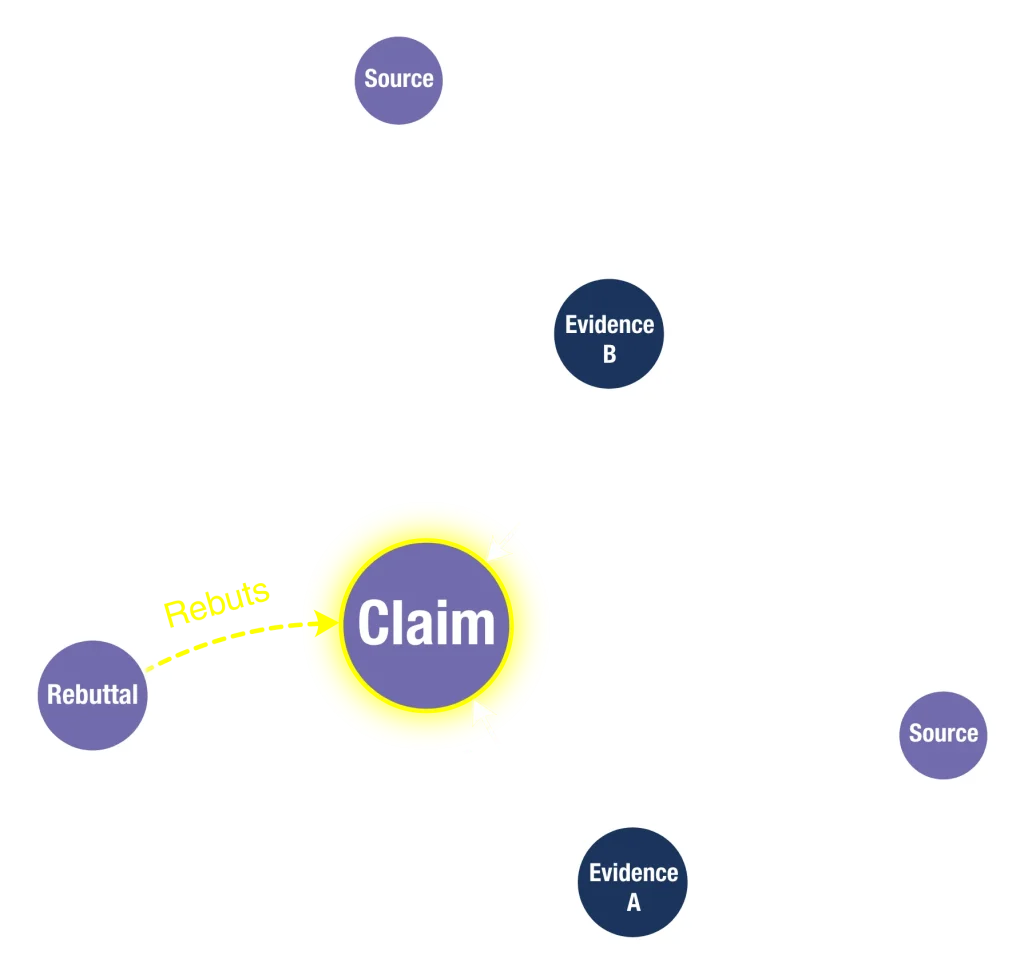
Decision-making is viewed as a graph structure (network) with “arguments” at the top. By visualizing the logical framework rather than numerical calculations, we identify “omissions” and “gaps” in the discussion.
Evaluation Process
It is executed in a series of systematized steps, from organizing and structuring information, to multifaceted quality assessment, to making integrated decisions, and to presenting areas for improvement.
Three challenges facing corporate decision-making
- Personalization
- Assessing the legitimacy of decisions
- Difficulties in accountability and auditing
The main mechanism of DDIM™.
- graphing
structure of
decision making - Node quality
6-axis evaluation - Theory of the weakest
wheel
Core score to be calculated
- validity
- transparency
- accountability
Expected Value and Areas of Application
Value to the organization
Strengthen accountability to stakeholders through objective proof of judgment, reduce audit costs, and accumulate as organizational knowledge.
Usage Scenes
Strict AI governance oversight of management decisions, M&A, government policy decisions, medical diagnostic support, finance, etc.
Scope
area of activity
The advisory area handled by JDACs consists of the following three axes:
- I. Strategic design support
-
1. advice on DX strategy and data utilization policy development
2. appropriate assessment of organizational transformation and digital investments
3. audit of vendor selection and outsourcing structure
- Ⅱ Verification/Review
-
1. validation of proposals, requirements definition, and PoC
2. design support for KPI and ROI measurement
3. ethics and risk check for data and AI
- Ⅲ Human Resources, Education and Dissemination
-
1. advisory certification system (JDACs certification)
2. management of training, courses, and certification exams
3. publication of annual white papers and awards system
JDACs Philosophy
JDACs Philosophy

- Mission
- Maximize the social value of
digital with the three principles of neutrality, verification, and implementation.

- Vision
- A society in which all organizations can make digital decisions based on evidence and ethics as a matter of course.
- Value
- JDACs activities are centered on the three principles of.
we will always be honest and neutral.
sense or convention.
returned to results in the field.
Promise
What we promise
Neutrality
Independent of interest
evaluates and makes
recommendations.
Implementation capability
Visualize with
evaluation axes rooted in demonstrations and standards.
Validity
Don’t stop with advice,
put it into a plan that will lead to
implementation.